
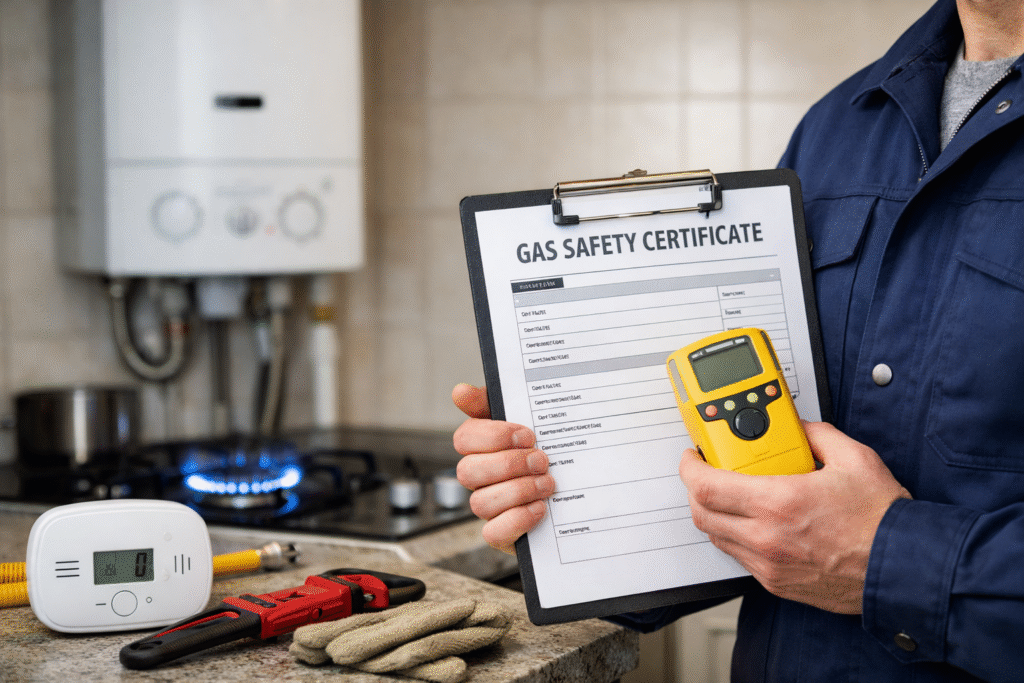
Gas appliances are common in homes and businesses. Boilers, heaters, cookers, and fireplaces often run on natural gas or LPG. While these systems are convenient, they also require proper maintenance and safety checks. A Gas Safety Certificate confirms that gas appliances and installations have been inspected by a qualified professional and meet safety standards.
This article explains what a gas safety certificate is, who needs one, how inspections work, and why regular checks are important for safety and legal compliance.
What Is a Gas Safety Certificate?
A Gas Safety Certificate is an official document issued after a qualified gas engineer inspects gas appliances, pipework, and ventilation systems. The certificate confirms that these systems operate safely and comply with current safety regulations.
During the inspection, the engineer checks:
- Gas appliances such as boilers, ovens, and heaters
- Gas pipework and connections
- Ventilation systems
- Flue systems that remove harmful gases
- Carbon monoxide risks
If everything meets safety requirements, the engineer provides a gas safety certificate. If problems are found, repairs must be completed before certification.
This certificate is often required for rental properties, commercial buildings, and workplaces that use gas appliances.
Why Gas Safety Certificates Are Important
Gas systems can become dangerous when they are poorly installed or not maintained. A gas safety inspection helps identify risks before they turn into serious hazards.
Protects People From Carbon Monoxide
One of the biggest dangers is carbon monoxide. This gas has no smell or color and can cause illness or death if it builds up indoors. Faulty appliances or blocked flues can produce carbon monoxide.
Regular inspections reduce this risk.
Prevents Gas Leaks and Fire Hazards
Gas leaks can lead to explosions or fires. Engineers check pipework, connections, and pressure levels to make sure everything is sealed and working correctly.
Helps Maintain Efficient Appliances
When appliances are checked regularly, they tend to operate more efficiently. This can lower energy costs and extend the life of heating systems.
Supports Legal Compliance
In many countries, landlords and businesses must provide proof that gas appliances are safe. A gas safety certificate helps meet these legal obligations.
Who Needs a Gas Safety Certificate?
Not everyone is legally required to obtain a gas safety certificate, but several groups commonly need one.
Landlords
Landlords must ensure that gas appliances in rental properties are safe. Most regulations require annual gas safety checks for rented homes. After the inspection, tenants receive a copy of the certificate.
Property Managers
Companies that manage residential buildings or apartment complexes often arrange gas inspections for multiple units.
Commercial Property Owners
Businesses that operate gas appliances, such as restaurants or hotels, must maintain safe gas systems to protect employees and customers.
Homeowners
Homeowners are not always legally required to obtain a certificate. However, many choose to schedule regular inspections for safety and peace of mind.
What Happens During a Gas Safety Inspection?
A gas safety inspection involves several steps. A certified engineer performs tests to verify that appliances operate safely and meet required standards.
Visual Inspection
The engineer first checks the condition of appliances and pipework. This includes looking for corrosion, damage, or incorrect installation.
Gas Pressure Test
Pressure levels are measured to ensure gas flows correctly through the system.
Flue and Ventilation Check
Flues remove combustion gases from the building. Engineers confirm that flues are properly installed and not blocked. Adequate ventilation is also necessary for safe combustion.
Appliance Performance Testing
Each appliance is tested while operating. The engineer ensures it burns fuel properly and does not release harmful gases.
Carbon Monoxide Assessment
If there are signs of incomplete combustion, additional tests may be performed to check carbon monoxide levels.
Once the inspection is complete, the engineer records the results and issues the certificate if all systems meet safety requirements.
Information Included in a Gas Safety Certificate
A gas safety certificate contains several important details. These records help property owners and regulators verify compliance.
Typical information includes:
- Address of the property
- Name and license number of the gas engineer
- Date of the inspection
- Description of gas appliances checked
- Safety test results
- Any defects or issues found
- Confirmation that appliances are safe to use
If problems are identified, the certificate may include notes explaining required repairs.
How Often Gas Safety Checks Should Be Done
Most safety regulations recommend annual gas inspections for properties with gas appliances. This ensures that systems remain safe as equipment ages.
Some situations may require more frequent checks, such as:
- Commercial kitchens with heavy appliance use
- Older heating systems
- Buildings with complex gas installations
Regular inspections help identify small issues early before they become expensive repairs.
How to Get a Gas Safety Certificate
Obtaining a gas safety certificate is a straightforward process.
Step 1: Hire a Qualified Gas Engineer
Only certified professionals are allowed to perform gas safety inspections. Always verify credentials and licensing before hiring an engineer.
Step 2: Schedule an Inspection
Arrange a convenient time for the engineer to inspect all gas appliances and pipework in the property.
Step 3: Complete Repairs if Needed
If the inspection reveals problems, repairs must be completed before certification is issued.
Step 4: Receive the Certificate
After the system passes all safety checks, the engineer provides the official gas safety certificate.
Property owners should keep this document for their records and provide copies to tenants when required.
Common Problems Found During Gas Safety Checks
Gas inspections often reveal issues that could become serious if left unresolved.
Some common problems include:
- Blocked or damaged flues
- Poor ventilation around appliances
- Gas leaks in pipe connections
- Faulty thermostats or safety valves
- Appliances that burn gas inefficiently
Addressing these issues quickly improves safety and helps avoid costly repairs later.
Tips for Maintaining Gas Appliance Safety
While professional inspections are essential, property owners can also take simple steps to maintain gas safety.
Schedule Regular Servicing
Annual servicing keeps appliances in good condition and ensures they operate efficiently.
Install Carbon Monoxide Detectors
Carbon monoxide alarms provide an early warning if dangerous gas levels build up indoors.
Keep Ventilation Areas Clear
Blocked vents or air pathways can affect combustion and increase safety risks.
Watch for Warning Signs
Signs such as yellow flames, unusual smells, soot marks, or frequent pilot light failures may indicate problems that require professional attention.
Final Thoughts on Gas Safety Certificates
Gas appliances play an important role in heating and cooking, but they must be maintained carefully. A gas safety certificate confirms that systems have been inspected and meet safety standards.
For landlords and businesses, this certificate is often a legal requirement. For homeowners, it provides reassurance that gas appliances are operating safely.
Regular inspections help prevent carbon monoxide exposure, reduce fire risks, and keep appliances working efficiently. Scheduling annual gas safety checks with a qualified engineer is one of the simplest ways to protect people and property.
By treating gas safety as a routine responsibility, property owners can maintain a safer environment for everyone in the building.


