
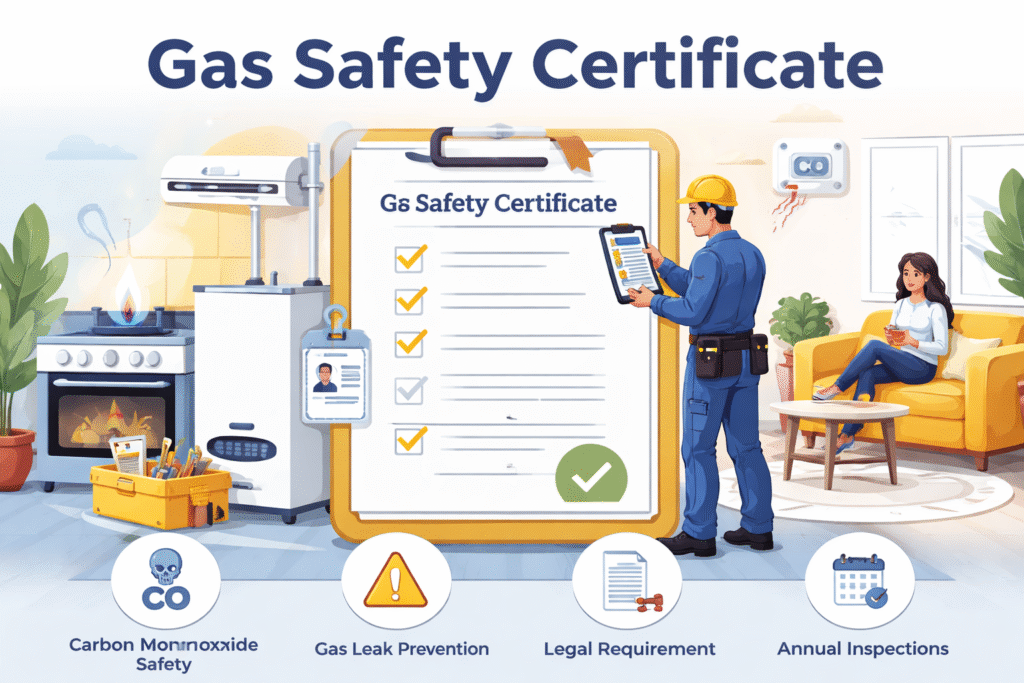
Gas appliances are common in many homes and commercial buildings. They power heating systems, cookers, water heaters, and fireplaces. While gas is efficient and reliable, it also requires careful handling. Faulty installations or poorly maintained appliances can lead to serious hazards such as gas leaks or carbon monoxide exposure.
A Gas Safety Certificate confirms that gas appliances, fittings, and flues in a property have been inspected by a qualified professional and meet safety standards. For landlords, property managers, and homeowners, this certificate is an important part of responsible property management and occupant safety.
This guide explains what a Gas Safety Certificate is, why it is important, who needs one, and how the inspection process works.
What Is a Gas Safety Certificate?
A Gas Safety Certificate, often called a Gas Safety Record, is an official document issued after a licensed gas engineer inspects gas appliances and systems within a property.
The certificate confirms that:
- Gas appliances are operating safely
- Gas pipes and fittings are secure
- Ventilation is adequate
- Flues and chimneys are functioning properly
- There are no dangerous gas leaks or carbon monoxide risks
The inspection usually covers appliances such as:
- Gas boilers
- Gas stoves and ovens
- Gas fireplaces
- Water heaters
- Gas pipework and valves
Once the inspection is complete and everything meets safety standards, the engineer provides the certificate to the property owner or landlord.
Why Gas Safety Certificates Are Important
Gas appliances can pose serious risks when they are not properly maintained. Regular inspections help identify potential problems before they become dangerous.
Protection Against Gas Leaks
Gas leaks can occur when pipes deteriorate, fittings loosen, or appliances malfunction. An inspection checks these areas and ensures the system is sealed correctly.
Prevention of Carbon Monoxide Exposure
Carbon monoxide is a colorless and odorless gas that can cause severe health problems or death. A safety inspection ensures that appliances burn fuel correctly and that ventilation systems work properly.
Legal Compliance for Landlords
In many countries, landlords are legally required to perform annual gas safety checks on rental properties. Providing a valid certificate shows that the landlord is meeting their legal responsibilities.
Peace of Mind for Occupants
Tenants and homeowners feel more confident when they know the gas appliances in their property have been inspected by a qualified professional.
Who Needs a Gas Safety Certificate?
Gas safety regulations vary by country, but the requirement usually applies to several groups.
Landlords
Landlords typically must arrange an annual gas safety inspection for rental properties that contain gas appliances. After the inspection:
- Tenants receive a copy of the certificate
- The landlord keeps a record for future reference
- Any unsafe appliance must be repaired or replaced immediately
Property Managers
Property management companies responsible for multiple buildings often coordinate inspections to ensure all units meet safety requirements.
Homeowners
Although homeowners may not always be legally required to obtain a certificate, it is still recommended. Regular checks protect both the property and the people living in it.
Businesses and Commercial Properties
Restaurants, hotels, and other businesses that rely on gas equipment must maintain safe systems. Inspections help avoid safety incidents and operational disruptions.
What Happens During a Gas Safety Inspection?
A gas safety inspection is performed by a certified or licensed gas engineer. The process typically takes between 30 minutes and a few hours depending on the number of appliances.
Visual Inspection
The engineer begins by checking the overall condition of gas appliances, pipework, and ventilation systems. They look for visible damage, corrosion, or improper installation.
Appliance Testing
Each gas appliance is tested to confirm that it burns fuel correctly and operates within safe pressure levels.
Flue and Ventilation Check
Flues carry harmful gases outside the building. The engineer ensures that flues are not blocked and that ventilation allows safe airflow.
Gas Tightness Test
A gas tightness test confirms that there are no leaks in the gas system.
Safety Device Verification
Modern appliances often include safety mechanisms that automatically shut off gas if a problem occurs. The engineer checks that these devices function correctly.
If everything meets safety standards, the engineer issues the Gas Safety Certificate.
How Long Is a Gas Safety Certificate Valid?
A Gas Safety Certificate is typically valid for 12 months from the date of inspection.
Landlords should schedule the next inspection before the current certificate expires. Keeping inspections up to date ensures continuous compliance with safety regulations.
Failure to renew the certificate on time may lead to legal penalties in regions where annual checks are mandatory.
What Information Appears on the Certificate?
A Gas Safety Certificate contains detailed information about the inspection and the property.
Common details include:
- Property address
- Date of inspection
- Name and license number of the engineer
- Description and location of each appliance checked
- Safety results of each appliance
- Any defects or recommendations for repair
The certificate also confirms whether the gas system is considered safe for continued use.
What Happens If an Appliance Fails the Inspection?
If the engineer finds a safety issue, they will classify it according to the level of risk.
Immediate Danger
If an appliance presents a serious hazard, it may be disconnected immediately to protect occupants.
At Risk
Appliances considered unsafe but not immediately dangerous may require repair or replacement before they can be used safely.
Advisory Notes
Minor issues or maintenance recommendations may also be included to prevent future problems.
Property owners should address these issues as soon as possible to maintain safety and compliance.
How to Get a Gas Safety Certificate
Obtaining a Gas Safety Certificate involves a straightforward process.
Step 1: Hire a Qualified Gas Engineer
Choose a licensed professional who is certified to inspect gas systems in your region.
Step 2: Schedule the Inspection
Arrange a convenient time for the engineer to visit the property and examine the appliances.
Step 3: Complete the Safety Check
The engineer will test each appliance and the gas system as part of the inspection.
Step 4: Receive the Certificate
If the system meets safety requirements, the engineer will issue the certificate. If repairs are needed, they must be completed before a certificate can be provided.
How Much Does a Gas Safety Certificate Cost?
The cost of a Gas Safety Certificate varies depending on several factors:
- Number of gas appliances in the property
- Property size
- Location
- Service provider
In many cases, the inspection fee increases slightly with each additional appliance that needs testing.
Landlords who manage multiple properties often receive discounted rates when scheduling several inspections at once.
Tips for Maintaining Gas Appliance Safety
While annual inspections are essential, routine maintenance also plays an important role in gas safety.
Consider these practical steps:
- Arrange annual servicing for gas boilers
- Install carbon monoxide detectors in key areas of the home
- Ensure ventilation openings remain unobstructed
- Never attempt DIY repairs on gas appliances
- Contact a professional if you smell gas or notice unusual appliance behavior
Simple preventive measures can significantly reduce safety risks.
Final Thoughts
A Gas Safety Certificate is more than just a document. It confirms that gas appliances and systems in a property meet important safety standards.
For landlords, it is a legal responsibility in many regions. For homeowners and businesses, it is a practical step that protects lives and property.
Regular inspections, proper maintenance, and prompt repairs all contribute to a safer environment. By staying proactive with gas safety checks, property owners can prevent hazards and ensure that gas appliances continue to operate safely and efficiently.


